Attic Safety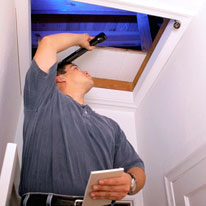
Fall might mark your first trip up to the attic in a while, whether you're storing items for the winter, retrieving blankets and coats or hauling out holiday decorations. Here's some advice for accessing attic space safely and assessing the area while you're up there.
Getting Up There
Dress Properly - Wear a hat, long sleeves, long pants, sturdy shoes and work gloves to protect your skin from rough surfaces and any exposed insulation or nails. You may also want to use safety glasses and a dust mask. Take along a flashlight.
Watch Your Step - Whether you enter your attic via steep stairs or up a ladder and through a hatch, watch your footing and climb slowly. Once in the attic, continue to step cautiously. Many attics have no finished floor, meaning you'll have to walk along the joists (or crawl on hands and knees) to avoid stepping on the ceiling of the space below and falling through.
While You're Up There
Check Pipes - Depending on where you live and the design of your home, you may have plumbing that runs through the attic. If so, look for signs of leaks or corrosion. Insulate any exposed pipes to prevent freezing and bursting in cold temperatures.
Inspect Wiring - Note the condition of attic wiring. Frayed or exposed wires pose a major fire hazard. If you find suspicious wiring, don't touch it—contact a professional electrician immediately.
Assess Insulation - Note the amount and type of insulation in your attic, as well as its condition. Moisture can cause mold to grow on insulation, and a poorly insulated attic allows heating and air conditioning to escape from rooms below, wasting energy. Get more insulation tips.
Verify Ventilation - Check for adequate airflow in your attic. Ideally, the temperature in the attic should be close to the temperature outside. Poor or nonexistent attic ventilation causes excess heat to build in the summer—making your air conditioning unit work harder—and can lead to the formation of frost and ice dams in the winter. Improper ventilation is also a major cause of harmful mold, mildew and rot.
Spot Leaks - If your roof leaks, you'll see clues in the attic. Look for stained or discolored wood on the underside of the roof or soggy insulation below.
Chase Out - Critters
Mice, squirrels, bats, birds, insects—a variety of creatures may seek shelter in your attic, bringing with them noise, odor and disease. Some may chew wires or ruin insulation. If you see signs of animals in your attic, contact a pest control contractor.